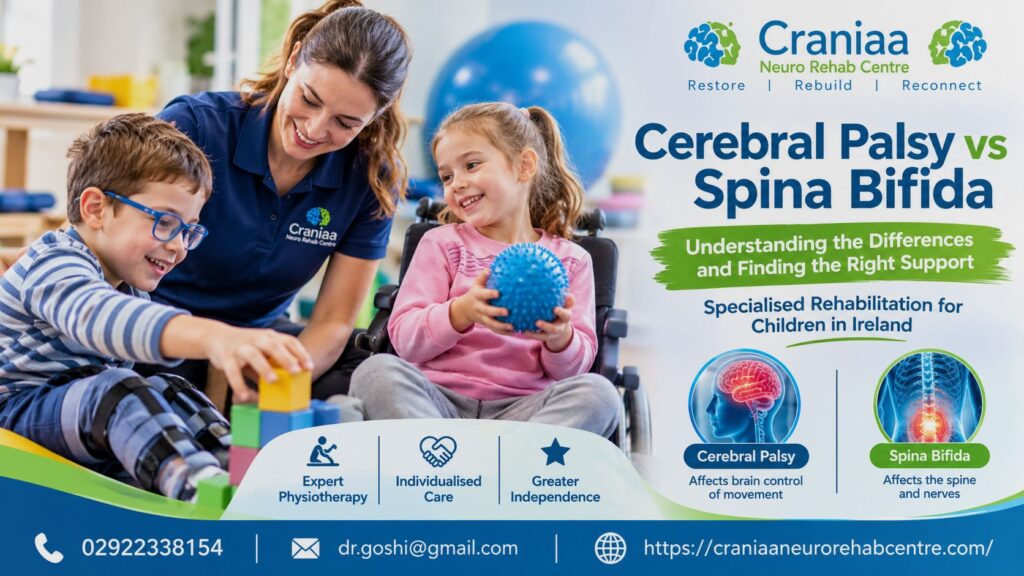
If your child has difficulty moving or balancing or is having trouble reaching certain milestones, it is normal to have queries regarding his/her health issues. There are two health conditions that parents wish to know more about. These include cerebral palsy and spina bifida. Though both these conditions affect physical development, they have different origins and features. Understanding cerebral palsy vs spina bifida can help families make informed decisions about their child’s rehabilitation and long-term support.
What Is Cerebral Palsy?
Cerebral palsy is an umbrella term for a series of neurological disorders that impact an individual’s movement, muscle tone, posture, and coordination. Cerebral palsy results from damage to the part of the brain that controls an individual’s movement, which occurs before, during, or after birth.
The symptoms of cerebral palsy can include stiff muscles, weak muscles, involuntary movements, or difficulty walking. Some children may also require assistance with communication, feeding, or daily living skills. The severity of cerebral palsy varies in each individual.
What Is Spina Bifida?
The Spina Bifida condition is where there is a defect which arises from an incomplete formation of the neural tube, and this affects the formation of the spine. The spinal cord and the nerves are affected as well.
The effects depend on the form and site of the spinal opening. There are some children who show mild effects, while others show muscle weakness, numbness, mobility problems, or bowel/bladder problems.
Families searching for spina bifida Ireland services should understand that care may involve different healthcare professionals, including doctors, physiotherapists and occupational therapists.
Cerebral Palsy vs Spina Bifida: What Are the Main Differences?
Both disabilities affect motor coordination and physical independence; however, their causes are different. Cerebral palsy arises from problems during brain development, while spina bifida arises from problems during spinal cord and vertebral development.
Causes and Physical Impact
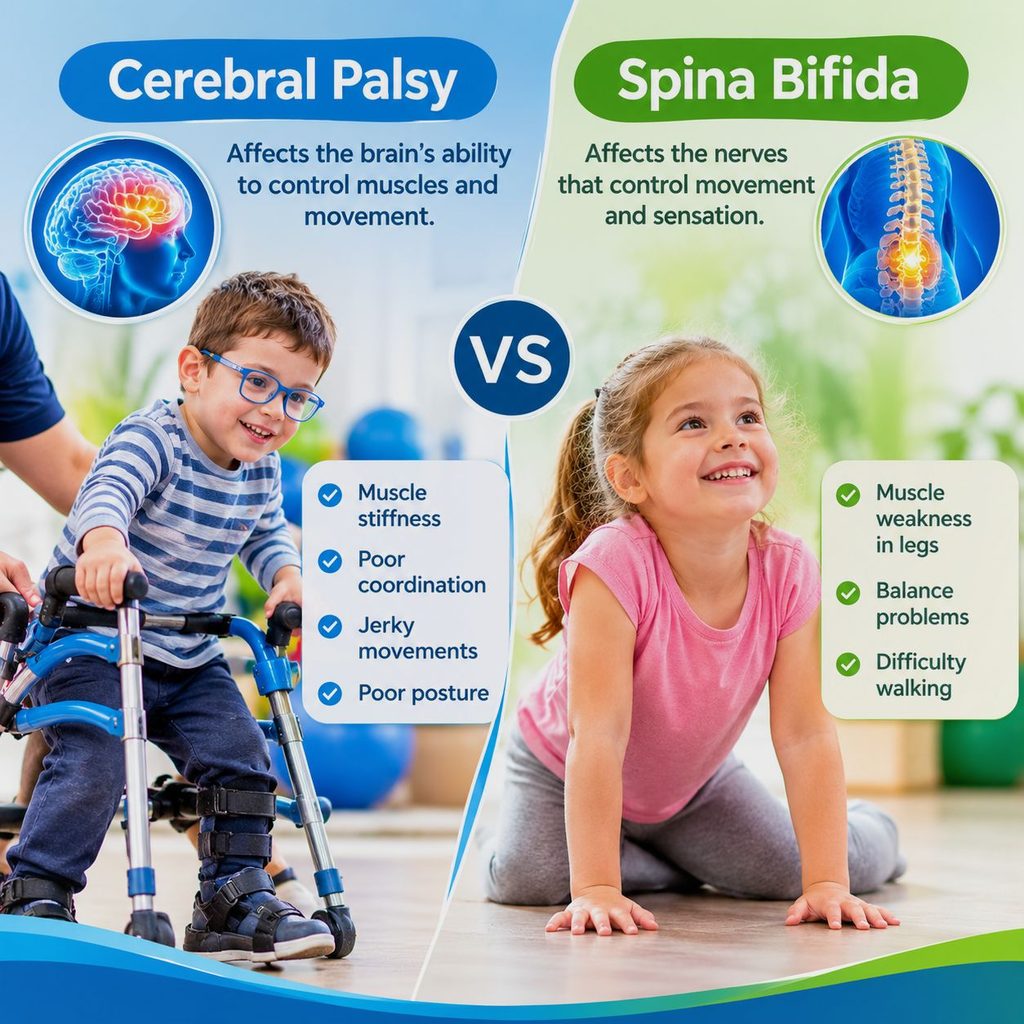
Cerebral palsy affects the ability of the brain to control the muscles and movement. Depending on the form of cerebral palsy, there may be stiffness of the muscles, poor coordination, jerky movements, or poor posture.
Spina bifida affects the nerves that control body movements and sensation in the regions below the affected segment of the backbone. There may be muscle weakness in the legs, problems balancing, and problems walking.
Treatment and Rehabilitation Approaches
There isn’t a single treatment plan for every kid. Both conditions require individualized treatments depending on what their body allows them, physically and medically, and where their development is headed.
Searches for Cerebral Palsy Treatment Ireland are likely to be from parents who are in need of advice to make their kids move better. Physiotherapy can range from stretches to strengthening, balancing exercises, posture work, etc.
The same goes for rehabilitation from spina bifida, which might involve muscle strengthening, positioning of joints, mobility and coordination, and use of orthopedic devices properly.
Why Individualised Physiotherapy Matters
Rehabilitation programs have to concentrate more on the objectives a child wants to achieve in their day-to-day routines. As such, some children are concentrating on their independent sitting skills, whereas others are concentrating on walking and hand skills.
This is where physio for cerebral palsy can play an important role. Regular assessment and carefully selected exercises help therapists adapt activities as a child’s abilities and goals change.
How Craniaa Neuro Rehab Centre Supports Rehabilitation
At Craniaa Neuro Rehab Centre, rehabilitation programmes focus on improving functional movement and supporting greater independence.
The centre describes using structured strength training, mobility exercises, balance activities and brain training for children with cerebral palsy. Its approach also includes Universal Exercise Unit therapy, commonly known as Spider Cage Therapy, which uses bungee cords, slings and pulleys to support movement practice.
For children with spina bifida, rehabilitation may include strengthening exercises, gait training, positioning advice, coordination activities and support with splints where appropriate.
Families exploring cerebral palsy treatment in Ireland or specialist rehabilitation for spina bifida should look for a team that considers individual needs rather than offering the same exercises to everyone.
Conclusion: Choosing the Right Rehabilitation Support
Understanding cerebral palsy vs spina bifida is an important first step towards finding appropriate support for your child. Although the two conditions have separate causes, both can require long-term rehabilitation and planning in regard to physical development.
Every little success counts, whether it is improved balance, better movement, or increased self-confidence in everyday activities.
At the Craniaa Neuro Rehab Centre, the aim is to help children reach their personal goals through neurological rehabilitation.
Visit Craniaa Neuro Rehab Centre to explore its services or contact the team to discuss your child’s rehabilitation needs.
Frequently asked questions (FAQs)
Cerebral palsy is a condition that involves movement controlled by the brain, whereas spina bifida involves failure in the formation of the neural tube.
Yes. Physiotherapy can be useful to help develop the child’s strength, balance, posture, coordination, and movements.
Some children with spina bifida can walk on their own, but others may use braces, walkers, or wheelchairs, depending on whether there is any nerve damage.
Physiotherapy may be recommended after proper assessment and according to clinical recommendations. It can help deal with any problems with movement and set development goals.
Parents can seek specialised neurological rehabilitation centres, such as the Craniaa Neuro Rehab Centre, which provides information about clinics in Belfast and Camlough.