The problem with balance, muscle weakness, or basic physical tasks can make even simple tasks feel difficult. In order to find the right rehabilitation method for those with neurological or movement problems, there is much that should be considered. The use of spider cage therapy is just one of the many therapies in specialised physiotherapy where people learn how to move but with added assistance.
At Craniaa Neuro Rehab Center, we assess each person’s individual needs and functions and select the most appropriate techniques accordingly. It is useful for people to know how such therapy works.
What Is Spider Cage Therapy?
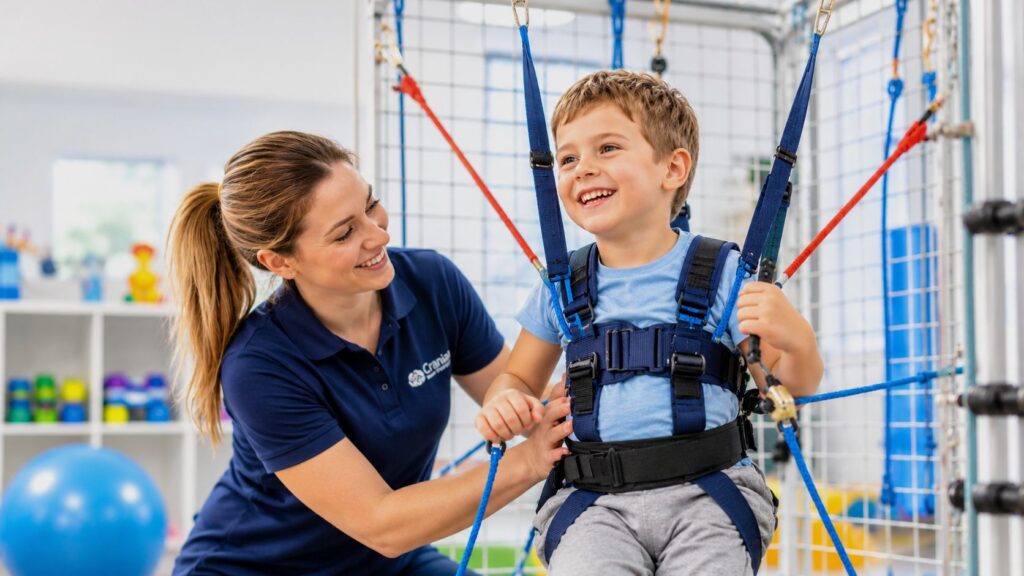
Spider cage therapy is a specialised rehabilitation technique that uses a metal frame, elastic cords, pulleys and supportive harnesses. It is also linked to the Universal Exercise Unit (UEU).
In this system, the therapist can change the degree of support given to the patient during his/her exercise sessions. In some cases, elastic cords might be used for body weight support to facilitate certain exercises and allow increased control over body movement.
As compared to regular exercises done without the use of extra support, this system allows a person to practice activities such as standing, balancing, walking, and changing posture.
How Does Spider Cage Therapy Support Rehabilitation?
The equipment provides opportunities to practise controlled movements while a therapist monitors posture, alignment and muscle activity.
1. Improving Strength and Muscle Control
A person can engage specific muscles and perform movements that they previously found difficult with the help of facilitated exercises.
2. Developing Balance and Coordination
It may be quite challenging for someone who has some neurological condition or poor postural stability to remain in a balanced state. Through facilitation, such a person will be able to develop body awareness.
3. Encouraging Functional Movement
Rehabilitation needs to link exercise with daily activity. Working on sitting, standing, walking and transitioning may allow a person to progress toward better participation and independence in daily activities.
Progress varies between individuals, and treatment goals should always be realistic and regularly reviewed.
Who May Benefit From Spider Cage Therapy?
Spider cage therapy may be considered for selected individuals experiencing movement difficulties associated with neurological or neuromuscular conditions.
They might comprise conditions such as cerebral palsy, developmental delay, some brain injuries, as well as other muscle problems such as loss of control, balance, and mobility.
In cases of patients having myasthenia gravis, it is necessary to consider rehabilitation exercises specifically. It is because this condition leads to fluctuation in muscle strength and might even cause fatigue. While individually prescribed physiotherapy might help maintain physical functions, spider cage therapy is not an effective treatment for myasthenia gravis.
A thorough assessment helps determine whether this equipment is appropriate and what level of support is required.
The Role of Neuro Rehabilitation and Neuro Physiotherapy
Effective neuro-rehabilitation goes beyond the repetition of physical exercises. It is more concerned with assisting the person in improving or sustaining his functional capabilities by a structured approach.
Neuro physiotherapy can help in dealing with movement restrictions, muscular weaknesses, coordination, postures, and balance. Based on individual needs, the rehabilitation process can involve a combination of exercise-assisted activities, functional movements, strengthening, and other methods of treatment.
At Craniaa Neuro Rehab Centre, the emphasis lies in the identification of the needs of the individual patient and setting the right rehabilitation goals. Spider cage equipment can be part of the overall process of treatment.
Safety and Individual Assessment Matter
Before starting Spider cage therapy, a qualified physiotherapist should assess the individual’s medical history, muscle strength, joint stability, posture and movement abilities.
The therapist needs to also take into account any precautions such as joint instability, severe bone problems, uncontrollable seizures, among other medical conditions.
Adjust the harness position, cord tension, exercise difficulty, and duration accordingly. Review progress regularly to determine when to modify the exercises.
Start Your Rehabilitation Journey With Craniaa Neuro Rehab Centre
Proper coaching, realistic goals, and individualised care help patients improve their movement, balance, and functional abilities. Spider cage therapy can further enhance these improvements by allowing patients to practise exercises in a controlled environment.
In Craniaa Neuro Rehab Centre, our concern is about individualised rehabilitation and the provision of support through neurophysiotherapy techniques.
For patients who have problems with movement, Craniaa Neuro Rehab Centre is here to offer assistance.
Take the first step towards better movement and greater confidence.
Frequently Asked Questions
The benefits of spider cage therapy include controlled movement practice, balance, coordination and strengthening of muscles for people who experience chosen neurological and physical movement problems.
Yes, selected children having developmental delays or neurological problems with movement may benefit from it after individual evaluation by paediatric physiotherapist.
It can help individuals practise supported standing, stepping and balance activities, which may contribute to walking goals when included in an appropriate rehabilitation programme.
Yes, certain adults who suffer from any kind of neurological disorders or mobility problems may benefit from this exercise method.
No, patients suffering from myasthenia gravis need medical supervision and a personal training program.