Stroke can literally alter someone’s life within just a few minutes. Such routine tasks like walking, dressing, handling a mug, or even speaking may suddenly become hard to perform. It can be rather challenging both for the patient and his/her family to cope with and move forward. But proper rehabilitation may help make some steps ahead.
Neurophysiotherapy for stroke plays an important role in helping individuals improve physical function, rebuild confidence and work towards greater independence. At Craniaa Neuro Rehab Centre, specialised physiotherapy centers around helping patients with neurological diseases by way of customised rehabilitation programmes.
Understanding Stroke and Its Impact on Everyday Life
Stroke is a condition where blood flow to some areas of the brain is hindered. This causes damage to the brain cells. Depending on the region of the brain that is injured, one suffers from muscle weakness, paralysis, loss of coordination, difficulty balancing and abnormal movement.
These problems affect movement, standing, walking and doing daily activities. They also cause tiredness and lack of confidence as people resume normal activities.
This is why stroke rehabilitation in Ireland should focus on the individual’s specific difficulties rather than following a standard exercise programme. Understanding the patient’s abilities, limitations and personal goals helps therapists develop a more meaningful approach to recovery.
How Neurophysiotherapy for Stroke Supports Recovery
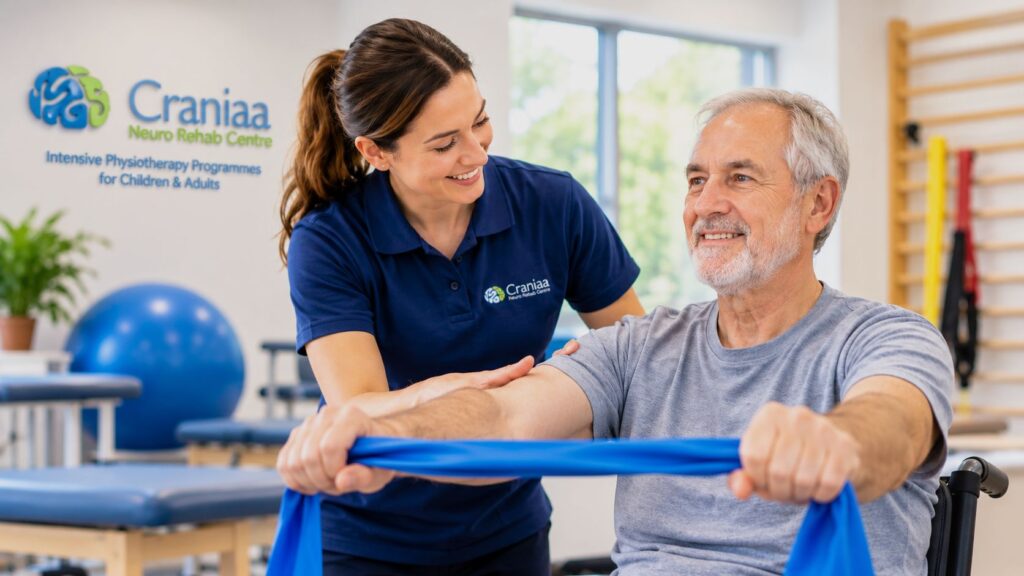
Neurophysiotherapy for stroke uses specialised movement-based rehabilitation to help individuals work on physical difficulties following neurological injury. It might comprise repetitive functional exercise, strength training, balance activities, and supported mobility activities.
This will be done with the aim of improving the ability of the patient to do the activities of daily living.
1. Improving Movement, Strength and Balance
Loss of muscle strength and balance are often problems faced by stroke victims. With the help of specific exercises, they can train themselves to make controlled movements, build muscle strength and have better balance.
Here at Craniaa, supported standing and walking, treadmill training and specific exercise equipment may be included in the regimen of a patient’s therapy, if required.
2. Rebuilding Functional Skills and Independence
Relearning everyday movements is an important part of recovery. Patients may work on sitting independently, transferring between surfaces, reaching for objects and practising walking.
A structured neurophysiotherapy for stroke programme uses activities suited to the person’s abilities and recovery goals. Repeated, meaningful practice can help individuals develop greater confidence in daily activities.
3. Supporting Long-Term Neurological Recovery
Recovery is not always over even when one leaves the hospital. There are some people who still have problems with movement months or years after their stroke.
Neuro rehabilitation in Ireland can be an effective way to overcome these problems through progressive exercises and mobility training. This program needs to be updated according to the progress made by the patient.
What to Expect from a Personalised Stroke Rehabilitation Programme
An effective rehabilitation programme begins with understanding the patient’s condition and individual needs.
At Craniaa Neuro Rehab Centre, the rehabilitation approach can include:
Assessment: Checking movement, muscle strength, balance, coordination and functional problems.
Individual exercise programme: Creating an exercise programme based on individual skills and goals.
Specific exercises: utilising specific equipment like Universal Exercise Unit, electrical stimulation and MotoMed.
Progress assessment: Evaluating progress and changing the exercises according to the patients’ needs.
Function training: Training for practical exercises that help in daily living.
The right approach to stroke rehabilitation in Ireland should also recognise that recovery varies between individuals. Exercise intensity and treatment frequency need to be determined according to clinical assessment and tolerance.
Why Choose Craniaa for Specialist Stroke Rehabilitation?
Getting the right kind of help for your rehabilitation process is critical in ensuring that you recover properly. The Craniaa Neuro Rehab Centre offers neurological physiotherapy services to adults and children alike. There are clinics in Belfast and Camlough.
This centre provides strength training, mobility training, balance training and rehabilitation equipment, such as the Universal Exercise Unit and Electrical Muscle Stimulation.
Its approach to neuro rehabilitation in Ireland focuses on individual requirements, practical movement and helping patients work towards achievable functional goals.
Families can also benefit from guidance about supporting safe practice and encouraging appropriate activities between therapy sessions.
Take the Next Step Towards Stroke Recovery
All recovery processes differ from one another and might take some time. Nevertheless, with adequate assessment and practice, people may achieve better mobility and independence.
If you or someone in your family needs specialist neurophysiotherapy for stroke, contact Craniaa Neuro Rehab Centre to discuss suitable rehabilitation options.
Call: 02922338154 or 02830054555
Email: dr.goshi@gmail.com
Website: https://craniaaneurorehabcentre.com/
Take the first step towards a personalised rehabilitation plan with Craniaa.
Frequently Asked Questions
Neurophysiotherapy involves the use of specific exercises and movement training in dealing with weakness, balance issues and mobility problems associated with a stroke.
Yes. Physiotherapy can aid in strengthening, coordination and walking but depending on the extent of the stroke.
The rehabilitation process usually starts as soon as the medical team deems it safe to do so, adjusting the level of treatment according to the patient’s condition and tolerance.
Recovery can vary greatly. While some people see improvement within weeks, others may need more time in rehabilitation.
Yes. People may benefit from appropriately assessed rehabilitation years later, particularly when working on mobility, strength, balance and everyday functional abilities.